Quantitative Models and Algorithmic Execution
In this article we will discuss quantitative models in trading. We will explore different quantitative trading models and how they are executed through algorithms.
Archive
Every report, newest first.
In this article we will discuss quantitative models in trading. We will explore different quantitative trading models and how they are executed through algorithms.
The market is a complex adaptive system in which many agents interact with the purpose of maximizing their different strategies. The sum of individual actions does not always correspond to the general behavior of the system.
Alpha Trading is the way to model Alpha Factors in scenarios of exposure to profitability. These models are gaining popularity among investors of all levels thanks to greater technological accessibility.
In this article, we will develop all the fundamentals of Arbitrage Pricing Theory (APT) and price discovery processes.
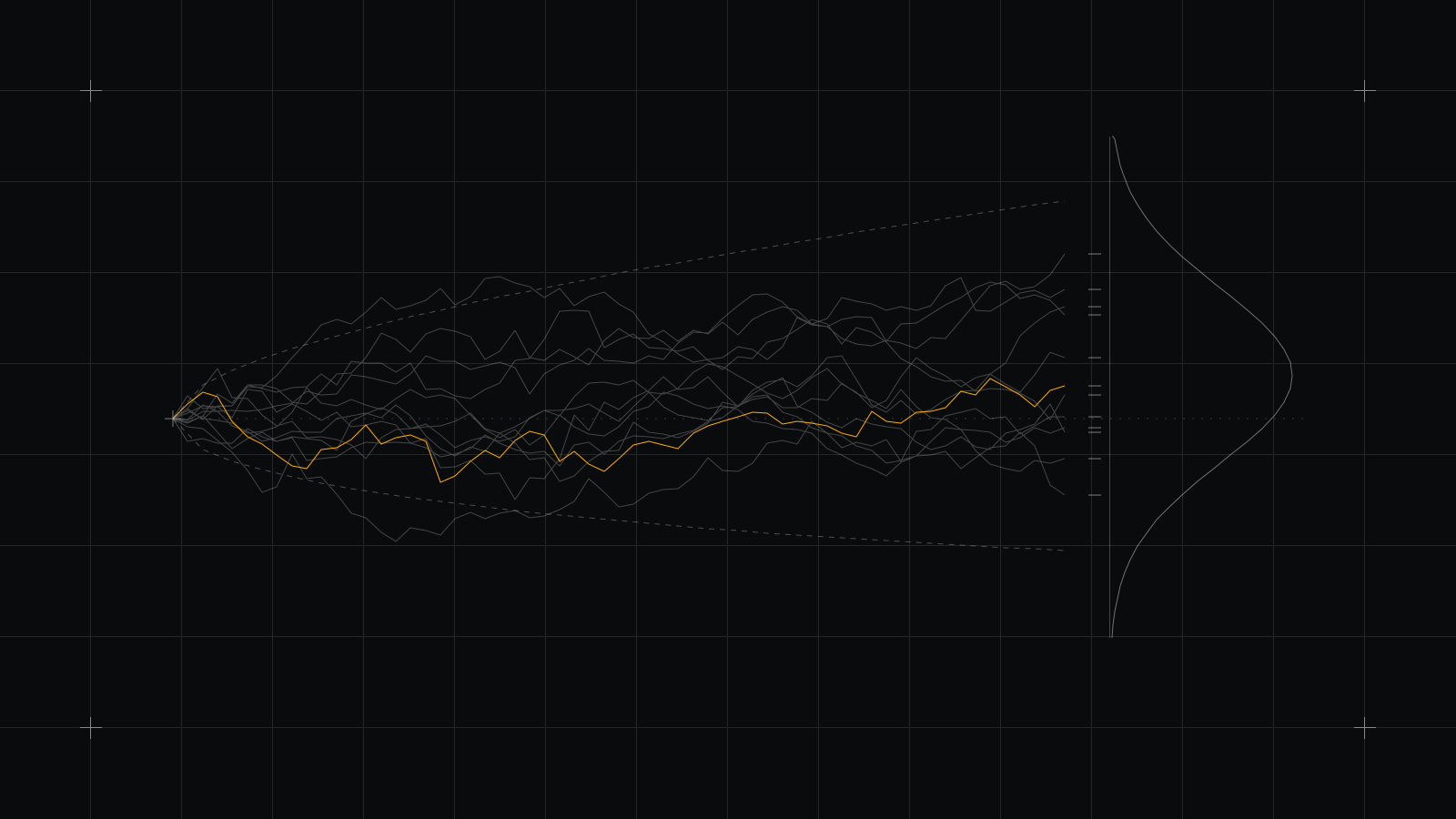
In probability theory, a stochastic process is a mathematical concept used to represent random quantities that vary with time or to characterize a sequence of random variables that evolve as a function of another variable, generally time.
In this study, we aim to implement a Volatility Targeting technique in Python from scratch. To do this, we will use a simple but effective methodology.
Although the general public tends to have a misconception about one of the most common uses of volatility, which is to assume its predictive effect on future volatility or asset price movements
In this article, we will explore the most widely used volatility estimators in trading. We will explain both their advantages and limitations, and provide any other relevant information.
In this upcoming series of articles, we will delve into the concept of volatility. We will begin by studying its theoretical framework in detail, then explore its causes, effects, and consequences.